
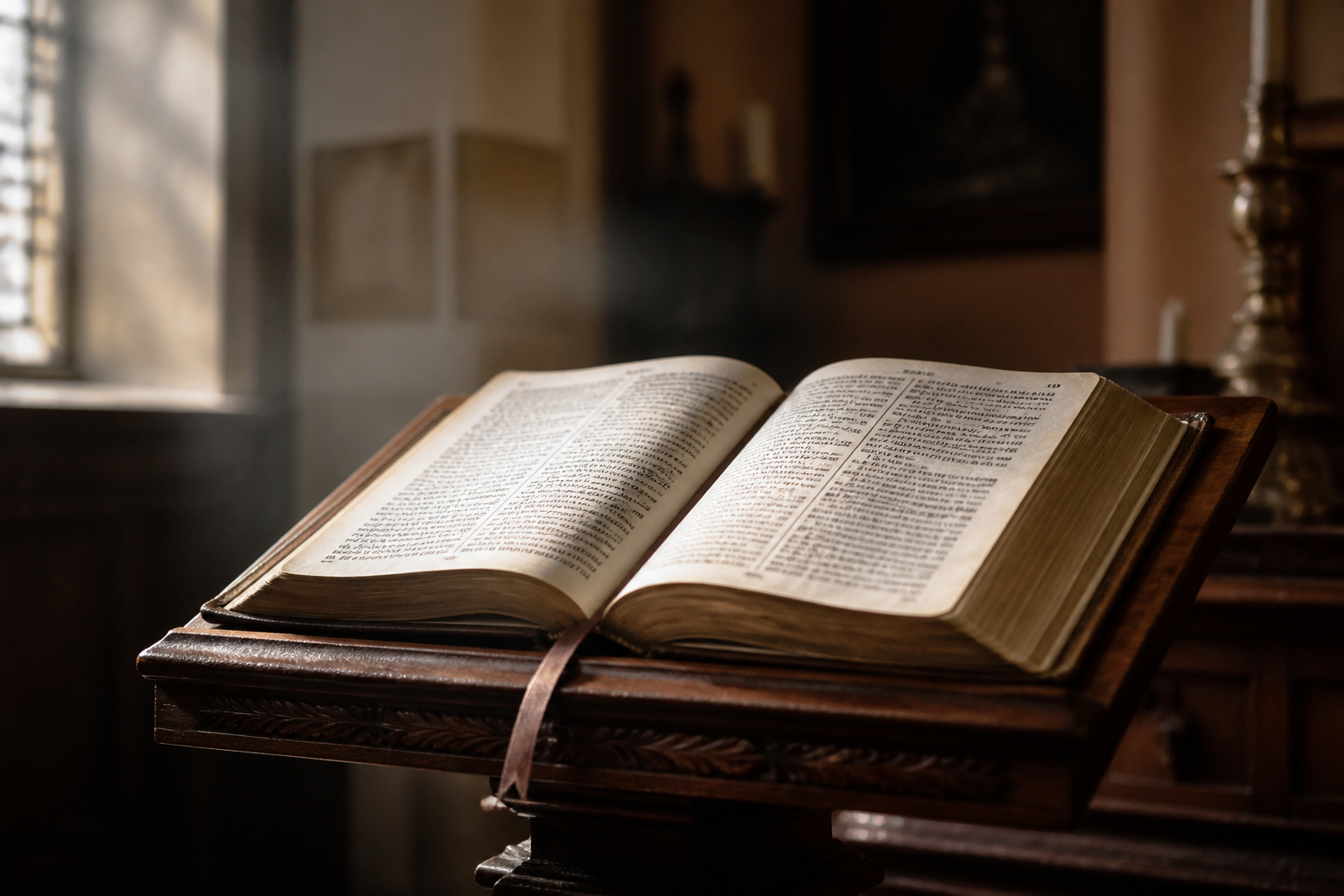
Bible study plans
Four plans: thirty days in John, twelve weeks in Ephesians, the Psalms in a month, and Genesis 1-11 in eight weeks, with a six-step way to lead any of them. A Bible study plan is a trellis for attention. It helps a household or group return to the same passage long enough to hear its argument, see its promises, and obey its commands. A plan cannot produce spiritual life. The Holy Spirit uses the Word of God, read and believed, to form the people of Christ.
Choose a book or a coherent section before choosing a theme. Read the passage aloud. Ask what the text says about God, humanity, sin, Christ, the church, and obedience. Pray the passage back to God. The leader should resist turning every meeting into a round of opinions. The question is what the Lord has spoken.
How to lead any plan well
- Open in prayer. Ask the Spirit to illuminate minds, not to replace careful reading.
- Read the whole unit. A paragraph for epistles; a scene for narrative; a psalm entire.
- Observe before interpreting. What repeats? What contrasts? Who acts? What is the main verb?
- Connect to Christ without forcing. Show where the passage sits in the story of redemption.
- Apply specifically. One command, one comfort, one change for the week ahead.
- Close in prayer using names and situations from the room.
Thirty days in the Gospel of John
John wrote so that readers may believe Jesus is the Christ and have life in his name (John 20:31). Read one chapter each day, with a slower second reading on the seventh day. Mark every claim about Jesus, every sign, and every response of faith or unbelief.
Week 1: chapters 1-4 (Word made flesh, first sign, Nicodemus, Samaritan woman). Week 2: chapters 5-8 (authority, bread of life, disputes). Week 3: chapters 9-12 (healing, Good Shepherd, Lazarus). Week 4: chapters 13-17 (foot washing, farewell discourse). Week 5: chapters 18-21 (trial, cross, restoration of Peter). Group meetings trace one theme per week rather than racing through commentary.
Twelve weeks through Ephesians
Paul's letter to a church learning identity in Christ suits mature groups. Spend two weeks in chapters 1 and 2, two weeks in 3, four weeks in chapters 4 and 5, and two weeks in 6. End each meeting with one household command and one gospel promise.
Memory verses anchor the series: Ephesians 1:7, 2:8-9, 4:32, 6:10-11. Pair with VBS themes on the armor of God if your church runs summer formation for children concurrently.
Psalms in a month (morning and evening)
The Psalter catechizes emotion before circumstance changes. Read one psalm at breakfast and one at dinner. Name the emotional movement, the covenant reality beneath it, and the way Christ teaches his people to pray.
Suggested clusters: Week 1 psalms 1-8; Week 2 psalms 23-30; Week 3 psalms 42-51; Week 4 psalms 90-100. Group night focuses on one psalm read by three voices: narrator, congregation lines, leader prayer.
Genesis 1-11 for foundations
Creation, fall, flood, and Babel establish the problem the rest of Scripture answers. Eight weeks at a comfortable pace for mixed groups.
- Creation and Sabbath rest (Genesis 1-2)
- Fall and consequences (Genesis 3-4)
- Genealogies as theology (Genesis 5)
- Violence and grace (Genesis 6-8)
- Covenant with Noah (Genesis 9)
- Nations and Babel (Genesis 10-11)
- Review: what Genesis 1-11 teaches about God, sin, judgment, mercy
- Bridge to Abraham (Genesis 12 preview and prayer for evangelism)
This sequence connects to the sermon series ideas on Genesis and creation.
A dependable meeting shape
Begin with prayer and a public reading. Give five quiet minutes for marking the page. Ask one observation question, one interpretation question, and one obedience question. Keep the leader moving toward the passage when conversation drifts. A strong question is precise: "Why does Paul place adoption before the command to walk?" A weak question asks whether the group liked the verse.
Leave room for application without making private disclosure the price of belonging. A member may need prayer without narrating every detail. The leader should know when a pastoral or elder conversation is required. Groups sit under the shepherding and discipline of the local church.
Choosing what to study next
Alternate Testaments. Follow a Gospel with an epistle, an epistle with a narrative book, a narrative with poetry or prophecy. A group that lives in one corner of Scripture develops a lopsided diet. Ask the elders before launching a plan; study under the authority of the church rather than alongside it. Avoid whatever curriculum happens to be trending this quarter. A patient walk through a book of the Bible will outlast every workbook with a celebrity pastor on the cover.
Plan the calendar in quarters and publish it. Families arrange travel, babysitting, and work shifts around what they can see. The church content calendar can carry the study schedule alongside worship and announcements so the whole congregation moves through the year together.
For households
Read less and return often. A father or other household head can read a paragraph, explain one phrase, ask children what they heard, and pray for obedience. Let children answer from the text. Do not reward cleverness over faithfulness. The purpose is a household that knows where bread is kept when temptation, grief, and confusion arrive.
Keep notes in a shared place so the group can remember what it has learned. For teenagers in the home, connect study nights with the gathering rhythm described in youth group evenings so household and church reinforce one another. Pair a plan with the order of worship on the Lord's Day and use newsletter structure to give the congregation a weekly reading rhythm.