A twelve-month church social media calendar, built on the church year
The actual grid for Advent 2026 through Advent 2027: computed feast dates, lead times, an approval matrix, verified scheduler pricing, and the whole calendar as CSV and ICS.

Most church social media calendars are advice about making a calendar. They tell you to pick channels, batch your captions, and plan a quarter ahead, and then they stop at the point where somebody has to write down what goes out on the second Wednesday of February.
This page is the grid. Every date below was computed rather than estimated. Advent 1 2026 falls on Sunday 29 November. Ash Wednesday 2027 falls on Wednesday 10 February. Easter Day 2027 falls on Sunday 28 March, five weeks earlier than in 2026, which moves Holy Week out of April and into March and breaks any calendar that was copied forward from last year. Those three dates alone reorganize about a third of a church’s publishing year, and they were knowable in 2025.
At the end there is a CSV holding 221 dated post slots for the church year from 29 November 2026 to 27 November 2027, an ICS holding the 80 decisions inside it, and a printable version of the monthly hour that keeps the whole thing alive. Take them and stop reading.
The church year has already written half of your calendar
A business planning a content calendar starts from nothing every January. A church does not. Count the seasons in the year this page covers and they occupy twenty-seven of the fifty-two weeks: four of Advent, two of Christmas, five of Epiphany, six of Lent, one of Holy Week, seven of Easter, and the two carrying Pentecost and Trinity Sunday. The subject of those weeks is settled before anyone opens a spreadsheet, and it is settled a decade out, because the arithmetic is closed.
Easter is the hinge. Ash Wednesday is 46 days before it, Palm Sunday 7 days before, Good Friday 2 days before, Ascension 39 days after, Pentecost 49 days after, Trinity Sunday 56 days after. Advent 1 is the fourth Sunday before Christmas. Every one of those is a subtraction, which is why this site’s liturgical calendar tool can print the dates for any year on demand, and why the calendar below was generated from the same computation rather than typed by hand.
Run it for the year this page covers and you get the spine:
| Observance | Date | Weekday |
|---|---|---|
| Advent 1 | 29 November 2026 | Sunday |
| Advent 4 | 20 December 2026 | Sunday |
| Christmas Day | 25 December 2026 | Friday |
| Epiphany | 6 January 2027 | Wednesday |
| Ash Wednesday | 10 February 2027 | Wednesday |
| Palm Sunday | 21 March 2027 | Sunday |
| Maundy Thursday | 25 March 2027 | Thursday |
| Good Friday | 26 March 2027 | Friday |
| Easter Day | 28 March 2027 | Sunday |
| Ascension | 6 May 2027 | Thursday |
| Pentecost | 16 May 2027 | Sunday |
| Trinity Sunday | 23 May 2027 | Sunday |
| Reformation Day | 31 October 2027 | Sunday |
| Advent 1, 2027 | 28 November 2027 | Sunday |
Those computed dates agree with the Calendar of the Christian Year for 2026 and for 2027 published by The Lectionary Page, which is worth checking rather than trusting, because a wrong Easter is the one publishing error a congregation will notice.
Two of those weekdays are worth stopping on. Christmas Day 2026 is a Friday, so Christmas Eve is a Thursday and the Sunday after Christmas is 27 December, the most-missed service of the year. Reformation Day 2027 is a Sunday, which happens roughly one year in seven and puts the Reformation post on a Sunday morning instead of a Saturday night.
What the year looks like as a production schedule
The seasons are the easy part. The work is the gap between the day an asset has to exist and the day the post publishes, and that gap is where church calendars actually fail. A photograph of a Christmas Eve service can only be taken at a Christmas Eve service. A Holy Week schedule cannot be published until the elders have settled the service times, and elders settle service times in a meeting that happens monthly.
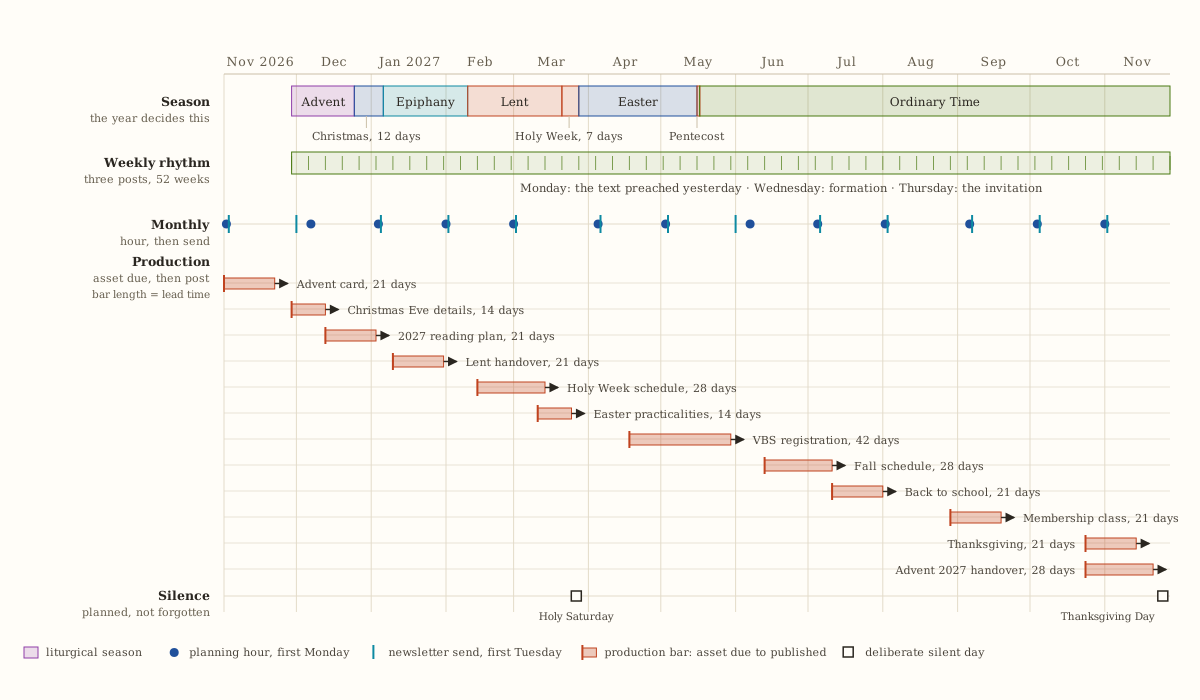
Read the fourth lane and the discipline becomes a number. Twelve moments in the year need more than a week of lead time. Their bars total 280 days of advance work, and nine of the twelve start in a different month from the one they publish in. That is the whole argument for the monthly hour: nobody holds nine cross-month deadlines in their head while also holding a job.
Three fixed slots, and why not five
The weekly rhythm is the second lane, and it is deliberately thin.
Monday: the text. One verse from the passage preached the day before, cited by chapter and verse, with no commentary attached. It costs two days of lead time, needs no approval beyond the volunteer, and is the only slot in the week that can be filled by somebody who was in the room on Sunday and nothing else.
Wednesday: formation. The one slot that changes with the season. In Advent it carries the candle theme. In Lent it carries a psalm and the reading plan. In Ordinary Time it carries a catechism question, a named prayer need with permission on file, or a ministry that honestly needs two more volunteers. Changing this slot and nothing else is what makes the seasonal overlay nearly free to run.
Thursday: the invitation. The same three facts every week for fifty-two weeks: the service time, the street address, and what happens with children. This post is written for a stranger, not a member, which is why it does not get clever and does not get shortened.
Saturday stays empty unless Sunday is different from usual. Four or five posts a week is where volunteer calendars collapse; the archive of abandoned church pages is mostly daily plans made in January. If your church already runs more than this and sustains it, keep going, and use the seasonal rows below rather than the weekly ones. If it does not, three slots a week published for a year beats seven slots a week published for six weeks, and running social media without a media team is the version of this problem with one volunteer in it.
The twelve months, season by season
Each block below gives the dates, the assets, the lead time, and the specific thing that goes wrong. Every one of these rows exists in the CSV with a working title you can overwrite.
Advent: 29 November to 24 December 2026
Four Sundays: 29 November, 6, 13, and 20 December. The season’s whole discipline in public is restraint, and the calendar enforces it by putting the Christmas Eve service details in as a separate post rather than letting Christmas language creep forward into the first week.
- 21 days before Advent 1, the printed Advent card exists: the four dates, the candle themes, the Christmas Eve time. Asset due 1 November 2026.
- 22 November, the week before the season starts, the handover post goes out. Advent begins next Sunday, here are the dates. Publish this before Advent, not during it.
- Each Monday carries the Sunday reading. Isaiah 2, Isaiah 11, Isaiah 35, Isaiah 7 in the traditional order. The Advent readings carry the passages and the candle themes if your church has not fixed them.
- 13 December, twelve days out, the Christmas Eve service post: time, doors, parking, childcare. This is a logistics post and it should read like one. The devotional post is a separate row.
- 20 December, the same details again. Repeating them beats trusting one post to reach everybody.
- 24 and 25 December, one scheduled post each. Nobody should be holding a phone during either service.
What goes wrong: the wreath photograph. A church that has not shot its own wreath by late November uses a stock one, and a stock Advent wreath is recognizable to every person in the congregation who has seen the real one.
Christmas and Epiphany: 25 December 2026 to 9 February 2027
Christmas is twelve days, not a countdown that ends on the 25th. The two posts that matter here are unglamorous.
27 December. The Sunday after Christmas. Say the service time, then say it again. Attendance falls, information does not travel, and a family that guessed wrong does not come back in January.
6 January, Epiphany. A Wednesday in 2027. This is the cheapest date in the American church year to own, because most churches skip it and the ones that keep it do so quietly. Christ made known to the nations, Matthew 2, one post.
January also carries the reading plan, which is the one post worth running twice in a month. Publish it on 3 January with the printed copies already in the building, because a plan announced without a way to pick one up is an announcement about a plan.
Lent: 10 February to 20 March 2027
Ash Wednesday is 10 February 2027, and the handover post is dated 31 January: ten days of notice on what the church will do and why. Six Wednesdays of formation follow, ending with the Holy Week schedule.
The photography rule tightens here. No photographs of ashes on foreheads without written permission from each person in the frame. An imposition of ashes is a moment of penitence that a member did not agree to publish, and the request is easy to make in advance and impossible to unmake afterward.
Holy Week: 21 to 28 March 2027
The heaviest week of the year, and the one that has to be finished before it starts.
- Asset due 14 February. The full Holy Week schedule, settled and printed. Twenty-eight days of lead time, because it has to clear a monthly elders’ meeting.
- 14 March. Every service, every time, one image, on Facebook, Instagram, the newsletter, and text.
- 21 March, Palm Sunday. The Passion is read.
- 25 March, Maundy Thursday. Scheduled the week before.
- 26 March, Good Friday. Isaiah 53 and the service time. No Easter promotion in this post.
- 27 March, Holy Saturday. Nothing. A planned silent day, written into the calendar so a volunteer does not helpfully fill it.
- 28 March, Easter Day. Two posts: the times at dawn, the photograph in the afternoon.
The Easter logistics post is dated 25 March and is deliberately separate from the Easter proclamation post. One tells a stranger where to park. The other says he is risen. Combining them produces a post that does neither.
Easter through Pentecost: 28 March to 16 May 2027
Fifty days, and the most under-used stretch of the year. Two rows in this block are the ones to get right.
11 April, the Sunday after Easter. What happens to a guest who came once. Easter and Christmas Eve are the two services a year that put unchurched neighbors in the building, and the decision about whether they return is made in the fortnight afterward, not in the service. Point this post at the next date on the calendar and the next human being, and pair it with an actual guest follow-up system rather than a caption.
23 May, Trinity Sunday. The one Sunday in the year with a natural occasion for a doctrinal post rather than an event post. Write one paragraph a member could use in a conversation, and route it through the elders.
Ascension on 6 May is a Thursday and gets one post whether or not the church gathers for it. Mother’s Day on 9 May gets one sentence and no sentimentality: the room contains women who have buried children and women who have none, and the post has to be true for them too. That row is marked for elder approval in the CSV for exactly that reason.
The VBS window: May to July 2027
Vacation Bible School is the one week in the year when roughly half the children in the building belong somewhere else. Lifeway Research’s account of six myths about vacation Bible school reports that of the children who attend, 29 percent attend another church and 22 percent do not attend church at all. Half the room is somebody else’s.
That changes who the posts are written for, and it changes the lead time. Registration is the longest bar on the whole year at 42 days:
- Asset due 18 April. Dates fixed, ages fixed, registration link live, setup photograph taken with no children in frame yet.
- 30 May. Registration opens publicly. Six weeks out.
- 13 June. Last call, written for a parent who has never been inside the building. What to bring, where to park, what happens at pickup.
- 21 June onward. One wide photograph a day, with the permission list checked against the register before anything goes out. Every single day.
- 25 June. The week is over. What happened, and when children’s ministry meets next. A visiting family either comes to a service in the following fortnight or does not, and this is the post that decides it.
VBS themes covers the week itself. The calendar’s job is the six weeks before it and the fortnight after.
Back to school and the fall push: July to September 2027
A church that publishes its fall schedule in the last week of August is late, and the retail calendar says why. The National Retail Federation’s back-to-school research put 62 percent of shoppers as having already started buying for the school year by early July 2026. Families decide their September commitments in July, and a church that announces small groups in the last week of August is asking for a slot that is already gone.
So the calendar puts the fall schedule on 11 July, with the asset due 13 June, and treats August as delivery rather than announcement:
- 11 July. Every fall start date in one image.
- 1 August. The prayer for teachers and students, with the date it happens. Southern districts start in early August; check your own district calendar and move the row.
- 15 August. Groups start again. The list, the nights, and how to join one. Group sign-up posts work in the fortnight before the first meeting and nowhere else in the year.
- 19 September. The membership class. Fall is the strongest membership season on the calendar.
Independence Day 2027 falls on a Sunday, in the year after the United States’ 250th anniversary. Lifeway Research found in June 2026 that half of US Protestant pastors said their church should do something special to commemorate it, with 47 percent disagreeing, and among those planning something, 62 percent intended to recognize living veterans and 55 percent planned special music honoring America. Pastors split 50 to 47 on whether to mark it at all. A church that has not settled the question in a meeting will settle it under time pressure in a caption box on a Saturday night.
Reformation and Thanksgiving: October to November 2027
Reformation Day is a Sunday in 2027. The teaching post goes out on 24 October with two weeks of lead time, the day post goes out on 31 October, and it says whether the church is doing anything on the one night of the year the whole neighborhood is outside.
Thanksgiving is Thursday 25 November. The service or the meal gets three weeks of notice on 14 November, the cancellations post goes out on 21 November, and Thanksgiving Day itself is the year’s second planned silent day.
Then the year closes by opening the next one. On 21 November, with the asset due 24 October, the Advent handover for 2027 publishes: Advent 1 is 28 November, and here are the four dates.
Who signs it off, and which gate applies
A calendar assigns work. It also assigns liability, and that is the part almost no church social media plan writes down. The CSV carries an approval column for every one of its 221 rows, and it resolves to this.
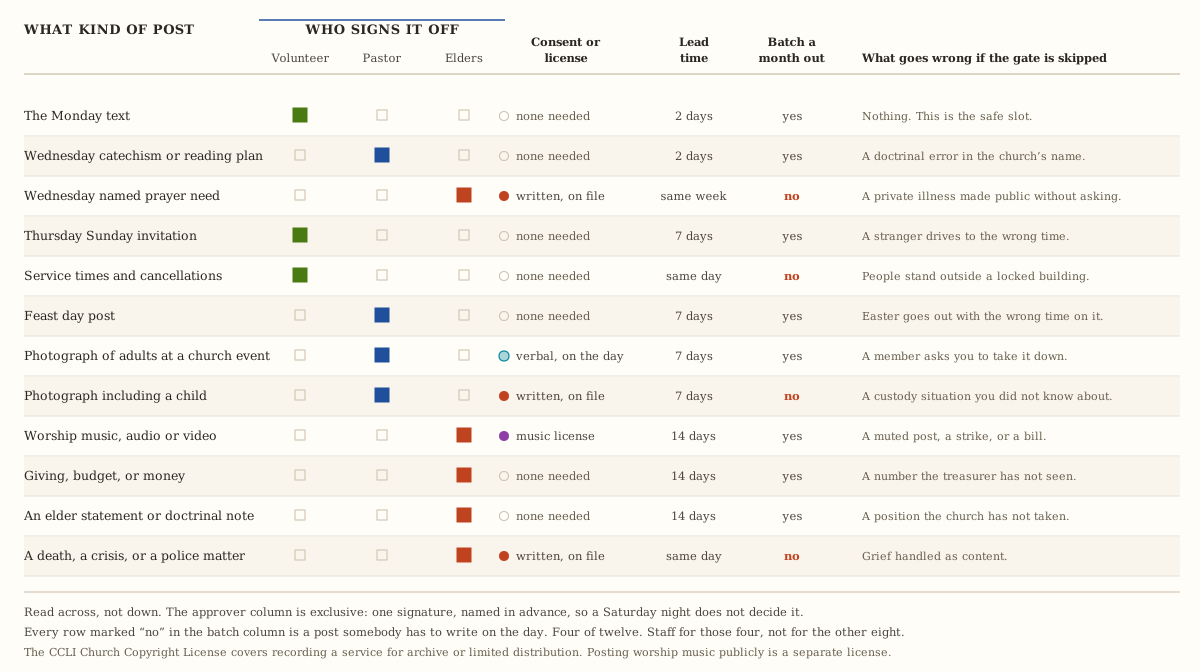
Three rows in that matrix are worth stating in prose, because they are the ones that generate the complaints.
A named prayer need needs written permission, checked again on the day. A diagnosis shared in a members’ meeting is not a diagnosis shared with the internet, and the person who consented in March may have a different answer in June. This is a row the elders sign, every time.
A photograph including a child needs written permission from a parent or guardian, checked against the register before the post goes out and not from memory. There is a custody or safety situation in most congregations that the communications volunteer does not know about, and the volunteer is not the person who should discover it by publishing. Protecting member data covers the same problem for the database.
Worship music is a licensing decision before it is a content decision. The CCLI Church Copyright License covers projecting lyrics, printing songs in bulletins, making custom arrangements, translating, and recording services for archive or limited distribution. Posting a recording publicly is not on that list, and CCLI sells a separate Streaming License for it. If nobody has bought one, the calendar should schedule preaching audio over a still image, which carries no music rights problem at all.
When to post, and on what
The calendar decides the subject. Two other decisions sit underneath it, and both have published numbers behind them.
Which platforms. The Pew Research Center’s social media fact sheet, from a survey of 5,022 US adults fielded 5 February to 18 June 2025, records YouTube at 84 percent of US adults, Facebook at 71, Instagram at 50, TikTok at 32, and X at 8. Broken out by age, Facebook runs 68 percent among adults 18 to 29 and 57 percent among adults 65 and over, while Instagram runs 80 percent among 18 to 29 and 19 percent among 65 and over. A congregation weighted toward retirement holds most of its reach on one platform. A congregation of young families needs two. Nobody needs five, and every account added is a weekly commitment somebody in the room has to promise.
When in the week. Sprout Social’s best times to post analysis, published 31 March 2026 from nearly 2 billion engagements across roughly 307,000 social profiles between 27 November 2025 and 27 February 2026, puts overall peak engagement on Tuesdays and Wednesdays between 11am and 6pm local time, with Facebook strongest Tuesday and Wednesday from noon to 8pm and Instagram strongest Tuesday 1pm to 7pm and Wednesday noon to 9pm. The Monday and Wednesday slots in this calendar sit inside that window. The Thursday invitation deliberately does not, because it is aimed at a decision somebody makes about Sunday, and Thursday afternoon is when that decision gets made.
The newsletter is the other half of the calendar and it does not compete with any of this. It carries the pastoral note, the month ahead, and the prayer list once a month, and the CSV puts it on the first Tuesday. Newsletter templates covers what goes in it. Church texting covers the channel this calendar uses six times in a year and never for anything ordinary.
What it costs to run a year of this
Twelve months loaded in advance means a scheduler, or a person free every Monday morning for a year. Here is what the schedulers actually charge, read off their own pricing pages on 29 July 2026.
- Buffer Free up to 3 channels, free forever
- Buffer Essentials $60 a channel a year
- Later Starter 8 profiles a social set
- Hootsuite Standard, price only in its own FAQ
Annual cost in US dollars, read off each vendor's own pricing page on 29 July 2026. Buffer prices per channel: Essentials is $5 a month or $60 billed yearly, per channel, and the free plan connects up to three. Later's Starter plan is $18.75 a month billed yearly, one social set of eight profiles and one user, which is $225 across the year; ten accounts needs Growth at $37.50 a month billed yearly. Hootsuite prints no figure on its plan cards; the $99 in the chart comes from the FAQ on the same page and is annualized at twelve months. Vendor pricing changes; check the page before you budget.
See the numbers
| Vendor | 2 accounts | 3 accounts | 5 accounts | 10 accounts |
|---|---|---|---|---|
| Buffer Free | $0 | $0 | not offered | not offered |
| Buffer Essentials | $120 | $180 | $300 | $600 |
| Later Starter | $225 | $225 | $225 | $450 |
| Hootsuite | $1,188 | $1,188 | $1,188 | $1,188 |
The shape is the useful part. Below four accounts the free tier wins outright and the correct answer is to pay nothing. At five accounts Buffer Essentials at $300 a year and Later Starter at $225 a year cross over, and Later’s single social set covers eight profiles against Buffer’s five paid channels. At ten accounts Buffer reaches $600 and Later needs its second tier at $450. Hootsuite sits above every line at every size.
Two honest notes about that chart. Hootsuite’s plans page shows “per month” and “per user/mo” on the cards with no number attached; the only figures on the page are in its own FAQ, which reads “Paid plans start at $99 for a Standard plan, $199 for a Professional plan, and range up to $399 for an Advanced plan.” A church cannot budget from a card that prints no price, and that is a reason to look elsewhere before it is a reason to look at features.
The second note is a claim this page cut. Metricool’s pricing page tiers by brand count behind a monthly and annual toggle, and two separate reads of it returned annual figures higher than the monthly ones, which cannot be right. Rather than publish a number that might be wrong about a real company, the line is absent. Check it yourself if the brand-count model suits you.
The two silent days, and the weeks nobody planned
Two rows in the calendar publish nothing on purpose: Holy Saturday and Thanksgiving Day. They are in the file because an empty slot with no instruction gets filled, and a cheerful post on Holy Saturday tells the congregation the church did not notice what day it was.
The unplanned silence is harder. Storms cancel services. A funeral rearranges a week. Publishing nothing for three days while a congregation grieves is the right call, and the calendar should be abandoned without guilt when it happens. Resume with facts, in this order: the time change, the funeral details, how to help the family. Then pick the rhythm up where it stopped. Do not backfill the missed posts. Nobody was waiting for them.
The other predictable failure is the volunteer. Communications work burns through one person inside a year. Build a rotation of three, train the backup before the primary leaves, and keep the logins in a password manager the church owns rather than in a personal email account, which is the most common way a church permanently loses control of its own page. Training a volunteer is the handover in detail, and what fills a church calendar is the prior question about whether the events on it should exist at all.
The downloads, and what is in them
Three files. They are plain text, they carry no tracking, and none of them asks for an email address.
The twelve-month calendar as CSV holds 221 dated rows from 29 November 2026 to 27 November 2027, in fifteen columns: date, weekday, season, church-year week, channel, slot, post type, working title, what to show, asset needed, lead days, asset due, owner, approval, and notes. Open it in any spreadsheet. The working titles are drafts written to be overwritten in your own words, and the notes column carries the reason each row exists. Cut any row your church cannot honestly staff; a cut row is a decision, and an unfilled row is a promise broken on somebody else’s shift.
The calendar as ICS holds 80 all-day events. It deliberately does not contain the 221 post slots, because four all-day events a week for a year would make a shared church calendar unusable and the first thing anyone would do is unsubscribe. What it holds instead is the decisions: twelve monthly planning hours, twelve newsletter sends, every computed feast, every asset deadline of fourteen days or more, and the two silent days. Google Calendar imports both ICS and CSV files on a computer, so either file will load, and the ICS is the one that belongs in a calendar app.
The sixty-minute planning hour as a printable page is the part that keeps the other two files alive. It is timed in five blocks, it ends with a handover, and it carries the four questions for the quarterly review with an elder: did we say anything untrue, did we publish anything about a person who had not agreed to it, did Advent wait, and is one person carrying all of this alone.
So which version should your church run
The calendar is the same for everybody. The tooling is not, and the honest answer for most churches costs nothing.
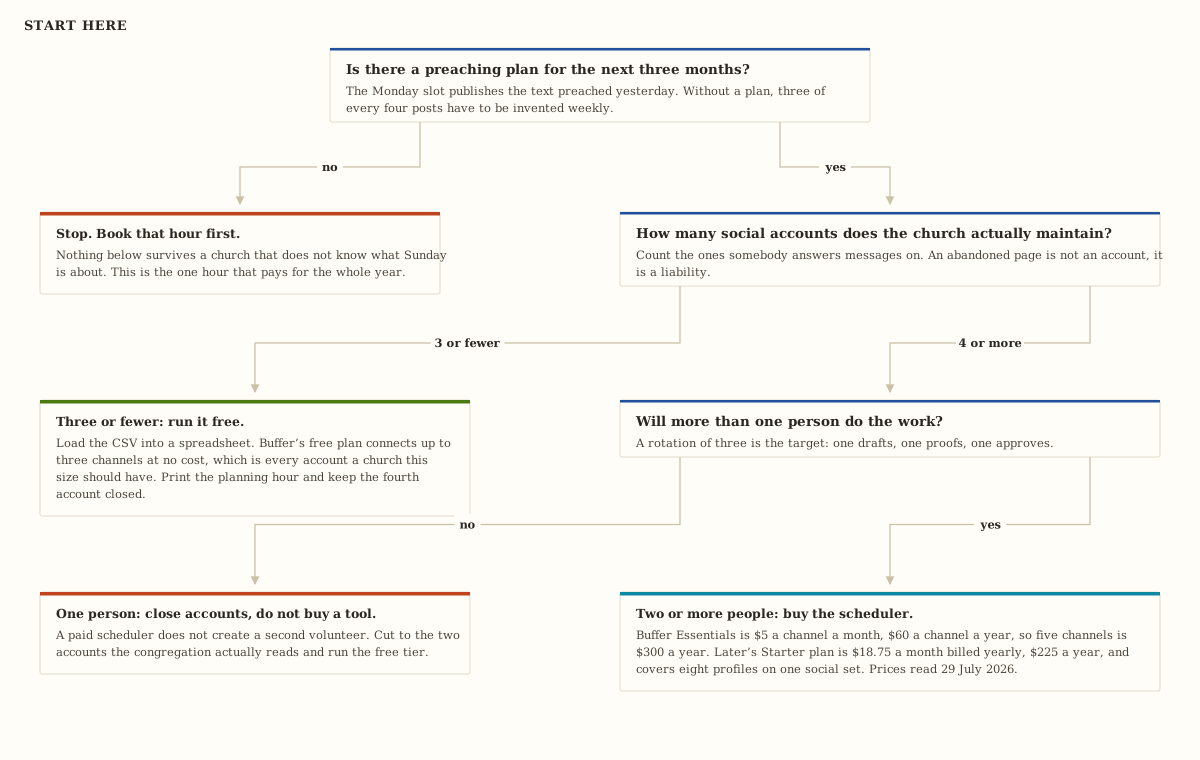
The first question is the whole thing. Three of the four weekly slots depend on knowing what Sunday is about, so a church with no preaching plan for the next quarter should close the spreadsheet and book that hour instead. Nothing downstream survives without it, and planning a year of preaching is where it starts.
After that:
Under four accounts, one or two volunteers. Run the CSV in a spreadsheet and use a free tier. Buffer’s free plan connects up to three channels at no cost, which is more accounts than most congregations should be maintaining. Print the planning hour, put it in the diary monthly, and spend the money you did not spend on a scheduler on a printer that works.
Four or more accounts, one volunteer. Close accounts. A paid tool does not produce a second person, and the failure mode here is a church paying $300 a year to abandon five pages instead of two.
Four or more accounts, two or more people. Buy the scheduler. Buffer Essentials at $60 a channel a year is the cheapest path up to about four channels; above that Later’s Starter plan at $225 a year covers eight profiles on one social set. Load the CSV, batch the eight approvable post types a month ahead, and keep a human free for the four that cannot be batched.
Whichever branch you land on, the work in the first month is the same: fill the working titles for December, shoot the Advent card by 1 November, and put the planning hour in the diary for the first Monday of every month. The rest of the year is already written down.
Spreadsheets and a free tier will carry a church for years. When you want scheduling built for churches, join posting early access. Planned free tier: up to three social accounts when the app launches.
Sources
Every date, price, and figure above was read from these pages on the dates given.
- The Lectionary Page, Calendar of the Christian Year, 2026. Checked 29 July 2026.
- The Lectionary Page, Calendar of the Christian Year, 2027. Checked 29 July 2026.
- Pew Research Center, Social Media Fact Sheet, survey of 5,022 US adults fielded 5 February to 18 June 2025. Checked 29 July 2026.
- Sprout Social, Best times to post on social media in 2026, published 31 March 2026, from nearly 2 billion engagements across roughly 307,000 social profiles between 27 November 2025 and 27 February 2026. Checked 29 July 2026.
- Lifeway Research, 6 Myths About Vacation Bible School. Checked 29 July 2026.
- Lifeway Research, Half of U.S. Churches to Honor America’s 250th Anniversary, published 16 June 2026. Checked 29 July 2026.
- National Retail Federation, Back-to-School. Checked 29 July 2026.
- CCLI, Church Copyright License. Checked 29 July 2026.
- Buffer, Pricing. Checked 29 July 2026.
- Later, Pricing. Checked 29 July 2026.
- Hootsuite, Plans. Checked 29 July 2026.
- Google, Import events to Google Calendar. Checked 29 July 2026.
Metricool’s pricing page was opened on 29 July 2026 and its monthly and annual figures could not be read unambiguously, so no Metricool price appears above.