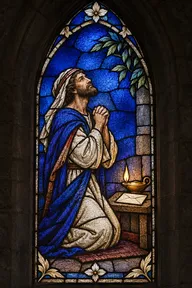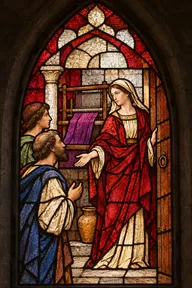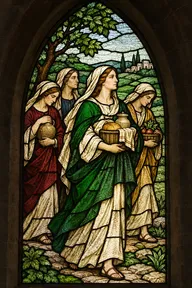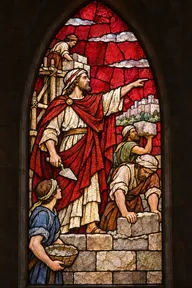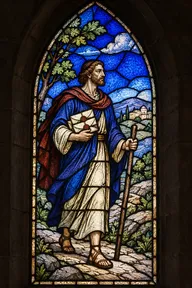












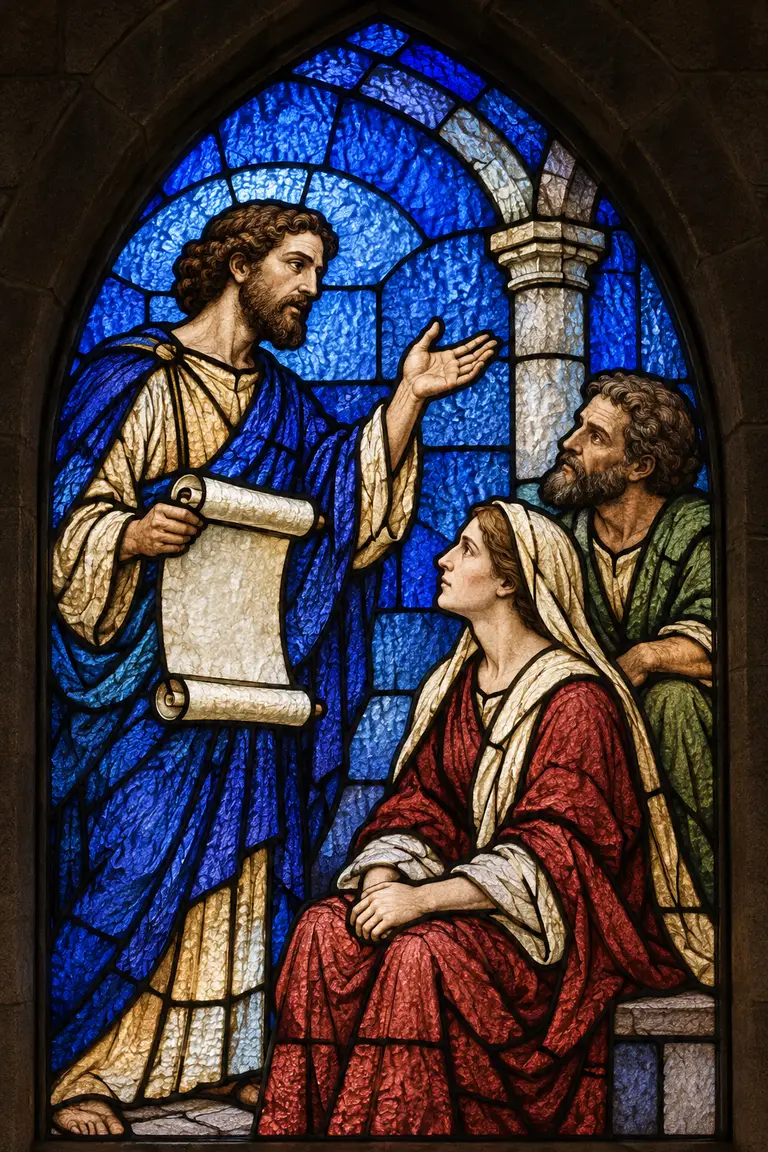
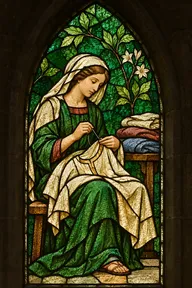
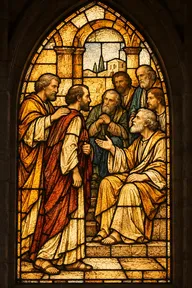
Apollos in stained glass

Apollos The Explainer

Opens the Bible with someone and stays with a hard passage until it comes clear.

Acts 18:24-28 · 1 Corinthians 3:6

Serving like Apollos today

People at church bring members who serve like Apollos their questions about a chapter in Romans, or about how an Old Testament passage points to Christ. Over coffee after the service, at the kitchen table with their own children or in a Sunday school room, they open the Bible and walk through the verses until the meaning comes clear.

They read a passage several times before they teach it, check their notes against the text, and take correction from someone who knows the Scriptures better. Scripture gives this work different settings for men and women. Women teach children and younger women (Titus 2:3-5). Teaching a mixed group of adults belongs to qualified men, and preaching and oversight belong to the elders (1 Timothy 2:12, 3:2). In each of those settings, careful teaching builds up the whole church.

What others notice

  • People bring them Bible questions after the service, and they open the passage together.
  • They read a chapter several times and check cross-references before they teach it.
  • Children they teach, in a class or at home, can retell last week’s lesson.
  • When someone makes a claim about Scripture, they open the chapter to see what it says.
  • They take correction gladly when a more mature Christian spots a gap in what they taught.

The duty every Christian shares

Paul calls every believer to let the word of Christ dwell richly among us, teaching and admonishing one another in conversation, in song and at home.

16Let the word of Christ richly dwell within you as you teach and admonish one another with all wisdom, and as you sing psalms, hymns, and spiritual songs with gratitude in your hearts to God.
Colossians 3:16(BSB)

The temptation to watch for

Knowing your Bible well can quietly feed pride, and congregations are quick to form camps around favorite teachers. Paul confronted both problems in Corinth, where members were saying "I follow Apollos" (1 Corinthians 3:4). Use what you know to build people up in love, and keep pointing them past yourself to Christ.

1Now about food sacrificed to idols: We know that we all have knowledge. Knowledge puffs up, but love builds up.
1 Corinthians 8:1(BSB)

Who Apollos needs: Dorcas

Dorcas keeps careful Bible study tied to real people in hard weeks. Working alongside someone who visits the sick and delivers meals reminds you who in your class has an empty pantry or a child in the hospital, so you teach with their real burdens in mind.

Dorcas needs Apollos in turn.

Places to serve

  • Teaching a children’s Sunday school class
  • Teaching your own children from the Bible at home
  • Teaching a lesson each morning of vacation Bible school
  • Reading through a Gospel each week with a newer believer of your own sex

A four-week trial

Offer to step in as a second teacher for one children’s Sunday school class over the next month. Ask whoever oversees the children’s classes where the biggest gap is, prepare each Sunday’s lesson straight from the passage, and sit down with them after week four to talk through what the children remembered.

Apollos from Alexandria to Ephesus

Luke introduces "a Jew named Apollos, a native of Alexandria," a large city on the Egyptian coast. He arrived in Ephesus as "an eloquent man, well versed in the Scriptures." Luke says he had been "instructed in the way of the Lord" and was "fervent in spirit." He spoke and taught accurately about Jesus, though he knew only the baptism of John.

Apollos had real ability and real zeal, and there was still something he did not know. Most people who start teaching Scripture in a church begin the same way, with zeal and gaps they cannot see on their own.
Priscilla and Aquila take him aside

Priscilla and Aquila were tentmakers who had lived and worked with Paul in Corinth before coming to Ephesus (Acts 18:2-3). When they heard Apollos speaking boldly in the synagogue, "they took him aside and explained to him the way of God more accurately." They corrected him in private and filled in what he had missed.

Luke records no argument from Apollos. When he resolved to cross over to Achaia, the brothers in Ephesus encouraged him and wrote to the disciples there to welcome him. Once he arrived, "he was a great help to those who by grace had believed," proving from the Scriptures that Jesus is the Christ.

Planting and watering in Corinth

Later in Corinth, factions formed around the men who had taught the church. One group boasted, "I follow Paul," and another answered, "I follow Apollos." Paul answered that both of them were servants (1 Corinthians 3:5): "I planted the seed and Apollos watered it, but God made it grow." Any faithful teacher works the soil and trusts God to give life.

When Paul urged Apollos to go back to Corinth, "He was not at all inclined to go now" (1 Corinthians 16:12). Paul does not say why, and he still called him "our brother Apollos." He later asked Titus to equip Apollos for his journey (Titus 3:13). Every teacher in the church works under Christ, who walked with two bewildered disciples on the road to Emmaus and "explained to them what was written in all the Scriptures about Himself" (Luke 24:27).

Teaching Scripture outside the pulpit

Most people who teach the Bible well in a local church never preach a sermon, and the congregation depends on them all the same. Preaching and oversight belong to qualified elders (1 Timothy 3:2), and teaching a mixed group of adults belongs to qualified men (1 Timothy 2:12). Careful teaching also happens every week in a third-grade Sunday school room, at a table where a father leads family worship, in a men’s or women’s study working through Philippians, and when an older woman reads Titus with a younger wife (Titus 2:3-4).

When people come to you with Bible questions, put in the same quiet work Apollos accepted from Priscilla and Aquila. Read the text more than once, check your conclusions against the rest of Scripture, and invite correction from mature believers. Keep Paul’s warning close as you teach, because "knowledge puffs up, but love builds up" (1 Corinthians 8:1), and prepare for a room of nine-year-olds with the same care you would bring to a room of adults.

The other eight servants

Every quiz